Rebecca Solnit writes comfortably in multiple veins as geographer, historian, environmentalist, memoirist, feminist, humanist, journalist, activist, even novelist. It’s pretty clear to me that she is one of our finest writers. In particular, her consistent artistic and poetic approach to essays and long-form narrarative is always surprisingly insightful and enlightening. And the way she writes, melding deeply personal perspective with a constant drive to pull back the curtain on the special ironies and contortions of American life, is the rarist form of reporting and commentary I know of – especially here in the 21st century (which, may I remind you, is now 25% in the can and still foaming).
Lately, Solnit’s been up on the battlements pushing hard to turn the tide in this current attempted
destruction of the American Way of Life by the Republican Party. I highly recommend following her newsletter essay work online at herMeditations in an Emergency site. I’m a paying subscriber, but you don’t have to be.
The insight (below) was not, however, posted through her Meditations newsletter, rather, it simply popped up front and center on my Facebook feed the other morning. As far as I can tell, even though I “follow” her Facebook page, there does not seem to be a “Comment” option available to me (although others have commented). I really wanted to add something to her points … which I will do, a bit extensively, after her quote below:
The trick is maintaining a sense of alarm that doesn’t tip over into despair (and at the opposite end, not falling into complacency it will all work out or that it’s someone else’s job to make it work out). We are in the middle of the story and we write it with how we show up, how we build solidarity, how we support those in the front lines, how we stand on principle, how we don’t let them erase those principles of truth, fact, law, science, human rights.
Rebecca Solnit on facebook (8/9/25)
Is This What You Wanted?
Let me note quickly that Solnit published a wonderful and important book of essays back in 2019 called Whose Story Is This?: Old Conflicts, New Chapters. Early on there, she writes: “This is a time in which the power of words to introduce and justify and explain ideas matters, and that power is tangible in the changes at work.”
The story metaphor goes a ways back in the history of any and every culture, but her Whose Story Is This? makes Rebecca Solnit one of the best messengers for the importance of it, especially here in our world where it’s estimated that 5.65 billion people have mobile Internet connections.
She says to us that we are in the middle of the story. I’d add that we’re always in the middle of the story. More importantly, it’s our story–all of ours together. Yet, partly because the media no longer knows what they’re doing, and partly because virtual screen reality makes most of us less connected to critical thinking and actuality than is healthy, it’s easy to feel helpless or to give up in disgust and tune everything out. What is it I’m hearing too often these days? Versions of the old Polish proverb: “Not my circus. Not my monkey.”
Sorry. It is, indeed, your circus, and not only is it your monkey, but they think you don’t know they see you as their monkey. See how dangerous storytelling can be?
In fact, the story is never really about where we are, but where we’re going. I’ll be as generous as possible here about the psychology of all the ugly, nihilistic behavior we’re all watching: Perhaps the twisting up of reality and disdain for truth is performed in order to manage personal insecurities and what seems to be an inability to understand (and accept) where we’re all going whether certain people like it or not. Their vision of a White Christian Conservative America flies in the face of everything this country was founded on. But that vision they have also happens to be a front or a ruse the poorly educated, super-rich (not just the billionaires) are using to attempt the creation of a laissez-faire chaos economy allowing them to get even richer at the expense of us common, plebian, proles – one and all – along with the planet in general.
Here’s the face-kicker in all of this (that I see, anyway): The media and the bulk of politicians on both sides are all busy attempting to make up our story about the current administration. They use the current president’s name over and over again. They’ve also in many cases decided to designate this time we’re all in as his era, and what he says as his -isms. That’s all part of this asshole’s plan. Some in the media even acknowledge this glitch in reality, but can’t help themselves anyway. The dude knows that his name in everyone’s mouth, regardless of the implications, means the story is being offered to him over and over again, and it’s all about him. He also depends on the simple reality that using his very name makes money for everyone who writes or simply mutters it in their op-eds, panel discussions, and news pieces.
They think what they’re doing works because you’re a chump.
A turning of perspective now seems to be coming to the fore with at least some awareness by the mainstream, along with a few fearless politicians, of the need to point fingers at the insipid, lazy, cowardly boot licking behavior of virtually all Republican politicians everywhere. As well, enough people – i.e., citizens – are wondering about voter accountability. Finally!
Asking each other: “Is this what you wanted?” “Were you simply looking for cheaper eggs and gasoline, or was that just cover for what was truly in your heart?” (Note: My small little mind keeps wondering if the actual 2024 election was more simply just about one of the most basic storylines ever – love vs. fear).
The very concept of “America” is, specifically, that it’s always everyone’s story together. We actually have no choice in the matter. That’s the idea of democracy and freedom of expression. It’s what we actually mean when we sing, “My country ’tis of thee…” My country, I sing of you.
Bad actors only seem to get a leg up when we allow them to hog the narrative. We’ve seen versions of that type of story over and over again in our history. Bad actors are always liars, think they’re above the law, cheat as much as they can, deploy threats or worse in order to overcome their illegitimacy, and tend to rationalize it all in the name of power and wealth. That behavior is deployed in an attempt to own our collective story. In the past, we trusted (or assumed/hoped) that the media world would mitigate and manage the story for all of us. Afterall, their job, supposedly, is to hold those in power accountable. However, over the last three decades that profession seems mostly to have lost its way for many reasons – the main one, of course, being our good old American business ethic of profitability. Professional writers and commentators everywhere compete now (almost insanely) with video games, “reality” TV, podcasts, social media, paid advertising, online gambling, the ubiquity of pornography, and the amped up, but always truly American psycho game of conspiracy theory and alternative everything.
How we…
Rebecca Solnit points us at “how we show up, how we build solidarity, how we support those in the front lines, how we stand on principle, how we don’t let them erase those principles of truth, fact, law, science, human rights.” Those two words, “how we,” are vital. Our story is told by each of us all the time in how we teach young people what’s right and what’s wrong; how we relate to others when we’re at work or commuting; and how we simply speak to people like food servers, grocery clerks, healthcare professionals, trash and recycling workers, contractor crews in our neighborhoods, etc.
More directly, perhaps, how we tell our political story these days is somewhat obvious in the manner we show up to demonstrate about our convictions as citizens; how we write letters to newspaper editors and our elected officials; how we speak publicly at community meetings; and how we post and comment to each other online.
Of course, so many of us still feel the need these days to be neutral or to hold back. Some still believe there’s a middle of the road, and that it’s a mistake to choose sides. I’ve heard numerous friends and peers say political stuff in social media isn’t acceptable. Part of the reason we’re in the pickle we find ourselves in these days is because some of our fellow citizens don’t understand the need to be part of the story. It’s not clear whether they even know that the story is about them no matter what. There’s just no rational or reasonable neutrality here in 2025. Everyone knows what’s going on out there – from the White House to Texas to California. The Republican Party is in the process of trying to set up a full-scale takeover of the American election system. Enough people not participating and not paying attention is what they’re counting on.
The “how we” question, then, is vital. You always have a choice about being positive or negative, kind or angry, inspiring or critical. However, taking a negative approach to your piece of the story may be another reason why we’re in this pickle. Frustration, anger, and feeling helpless was legitimate for a few days there at the end of January (2025), but now we’re watching a bunch of clowns and boobs dismantle everything from public health to clean air and clean water to food safety. They’re also unlawfully firing federal employees (who work for us!), eliminating worker’s rights all over the nation’s economy, willfully accelerating global warming emissions, and slowly implementing a police state using our armed service personnel against the very people they are sworn to protect (and who they work for!). Do we have time to yell and scream and be angry with each other? Does that make anyone feel better or change things? Is that the story? Anger, aggression, hostility?
For what it’s worth, I say be audacious with every form of love and kindness you have in you. Broadcast it to the world as best makes sense from your orbit. Make sure you’re living that love and kindness in real life as well. Understand the importance and historic successes (and the hard work) of pacifism and non-violent civil disobedience. Support writers and other artists up on the battlements in the fight to tell the full story. Invest in community media projects like public radio and TV. Also, local newspapers and magazines.
Part of properly telling our story is about staying stupidly informed. A lot of folks feel that it’s fine to get the news and their information from no-cost online sources. That’s probably not good enough. I subscribe to three different national newspapers along with The Guardian’s International edition. We have subscriptions as well to four separate mainstream periodicals (possibly five) along with eight focused cultural publications such as The Oxford American, The Drift, The Paris Review, The Bitter Southerner, Creem, etc. And I support a few newsletters by writers I respect–including Rebecca Solnit’s Meditations in an Emergency. We also cook our own food, prepare our own tea and coffee, don’t eat much expensive meat, and limit “going out” for entertainment (a secret to a 35 year marriage is finding each other more entertaining than any live concert, comedian, or movie) which is one way we cost-justify all those subscriptions. And yes, a lot of stuff piling up to be read all over our house. That’s the idea. I like it that the story is in every single room of our house.
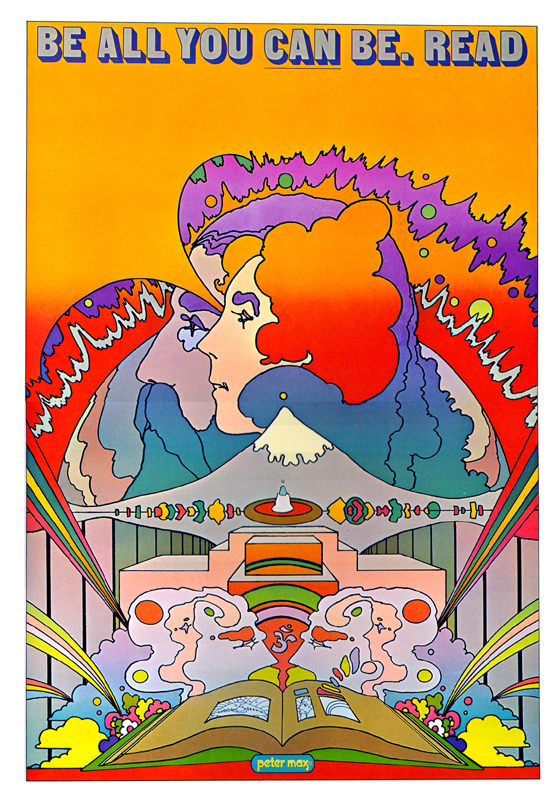
Remember that saying?
“Be all you can be. Read.”
Maybe you don’t remember. Trust me, it’s one of the most important things we were all exposed to back in the day – yup, us fucked up Boomers.
Weird Warriors
One thing about this life as Americans is that most of us are at heart rebellious, authority questioning, independent, smart-aleck, jokesters. I see that in this new angle to the story we are beginning to try to tell together. No matter what you think of this essay, I know you are capable of being crazy and unpredictable. It’s a weird warrior mentality. We’re all blessed with it. That’s what got each of us through life to where we are right now. It’s a trait each of us is proud of in one way or another.
They think what they’re doing works because you’re a chump. But you’re not a chump. I say, kick that warrior mentality you have up a few notches for at least the rest of this decade. Practice radical forms of empathy if you can, but also be a creative social guerrilla soldier. The best weapons we have – always – are being authentic, honest, and real.
Additionally, fear-mongering can’t work forever. It requires an immense amount of unsustainable negative energy (on their part). Enforced fear is utterly counter-productive to a good life for anyone except the wannabe bullies and the super-rich assholes. I’m guessing certain people find it hard to wake up every morning when they know there’s a nation of crazy, unpredictable, weird warriors out there who do not like what is being done to their country and who are taking the story back. Facing off against a bunch of weird warrior types who want the world to be a better place? Really? How long can you keep up your opposition?
Our political system has been mostly incompetent for a very long time now. Our economy – based on the idea of minimizing the cost of labor and real work – does not allow everyone to thrive, not even close. Also, our technology choices are fucking up the planet–and literally getting worse by the week. Those problems are everyone’s. We all contribute to them every day whether we want to see that or not. There’s a country full of heroes in this story we’re telling, but those heroes are also the asshole, bad guys when it comes to global warming.
Yet still, the idea of a “more perfect union” is always in the offing. Solving problems and making things work better is not just a noble aspiration. It’s how we got here, and it’s how we move forward and actually create a better world for our grandchildren and their friends (if you peruse my social media accounts, you will bump into photos of my grandson). The story we’re telling has always been about the way we’re transforming America – and much of the rest of the world.
For years, the quote on my personal Facebook page has been: “You are what you read.” I mean that in every way possible.
But I think nowadays it’s important as well to know that: “We are the story we tell together.” Let’s get to work, then. The plot is certainly getting thicker.
For more on Rebecca Solnit’s work go here.
To learn more about the American Library Association, go here.