I originally posted a version of this in 2013. Seems useful still, now, these days of lost men and boys (not all of us, but maybe too many). Apologies for length. What’s a novelist to do?
Here’s what I think about at some point of every day:
What is going on in this world that would lead so many men far, far away from reading modern literary novels?
I’ve written here at this blog and in other places around the Internet about my overall concern for literary fiction. A helluva lot of intelligent people want nothing to do with it anymore. Before the Internet took hold (about 30 years ago), I thought that somehow it was just my little world here in Philadelphia. Over the past three decades or so, however, it’s become quite obvious as I travel around the Internet (and parts of the country where they play minor league baseball) that most people in America at least don’t give a shit about serious fiction.
Have a Heart?
This problem is definitely particular to guys. Whether we’re talking 25-year-old recent graduates of top level Ivy League institutions or dudes like me who are getting rounder and grayer every year, few of us enjoy a good long several weeks curled up with Dostoevsky or even time at a coffeehouse caffeinating while receiving a strong dose of craziness alongside Kerouac or Burroughs or Ginsberg. Us boys pretty much run from any serious fiction – be it the classics and 20th century neo-classics to the latest from DeLillo, Joy Williams, Rushdie, Murakami, Sigrid Nunez, or Ann Patchett.
I’ve got a long essay in process looking at this issue full of examples of supposedly great novels that miss their mark for men, along with recommendations for what I think authors need to address if they want to get men reading serious fiction again. I ain’t going to publish that here (yet).
What I want to recommend, though, is that you read the latest Jeffrey Eugenides short story, called “Find the Bad Guy,” published in the November 18, 2013 edition of The New Yorker. Go buy the magazine to read it. You can also access it online, of course.
The reason I want you to read this story is because I think it’s getting closer to what is sorely needed out of the publishing world these days: an honest depiction of men struggling with the confusion of love (and other emotions) while battling the shitty-faced demons of masculinity — inexplicable rage, antagonism with authority, stunted powerlessness, pending alcoholism, and always feeling like people think we’re the bad guy.
So many of the “important” stories of the past shaded men as limited emotional beings. The best of that fiction never missed a chance to hint at the emotional complexity of things, but it was rare to put that complexity out as the story itself. Guys appeared tough, distant, rebellious, suave, angry, shrewd, calculating, funny, desperate, addicted, bumbling, attention starved, narcissistic (!), but rarely caring, emotionally complex, or deep, all still while struggling sometimes with some of those other things.
As any idiot male with two-thirds of a brain knows, emotional complexity is the very basis from which we each operate every day. Even the fathers of my generation have gotten around to understanding the reality of emotional complexity. There’s a bathtub full of stories to be told about that complexity.
Eugenides’ “Find the Bad Guy” does a fabulous job of defining what I’m talking about here. Others are doing the same thing (I am very impressed with how Haruki Murakami depicts Tengo Kawana in 1Q84), but I think it’s still hit or miss in so many ways for most. Eugenides almost completely nails it with this story.
The Marriage Plot Thickens
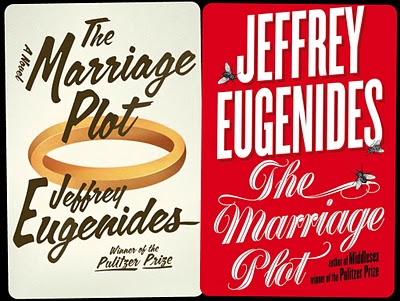
I was taking a coffee break from happily reading this story a few days ago when, low and behold, I noticed an email from The Millions with the subject heading: “The Marriage Plot Problem.” I knew it had to have some reference to Eugenides (who published his critically acclaimed novel The Marriage Plot several years ago) so I clicked it open and sure enough two essays — one new one in The New Yorker, and one from 2011 by Eugenides himself at The Millions — each referenced interesting perspectives on the useful veracity of today’s novels, and made comparisons between modern and 19th century fiction.
What struck me reading both of those essays, and also finishing “Find the Bad Guy,” was how easy it is for people to miss the point of serious fiction. I’m not even sure Eugenides knows why I might think his story is so important.
Both of the essays I’m talking about concerned themselves with the question of using marriage and filial relationships as the basis for plotting out novels, how back in the 19th century marriage was the center piece of culture and allowed plots to turn on questions of betrothal and the rituals that surrounded the rules of marriage.
Today, however, marriage is supposedly less central to the reality we all live in. Women’s rights eliminates all sorts of implications for plotting. Simply put, in today’s world Anna Karenina could just divorce Alexei Karenin, settle out of court for a piece of his wealth, file for joint custody, and then either marry Count Vronsky or have wild sex with him for a year or two and then move on. Boom! Even with the wild sex, probably not so interesting to read. In fact, I’m pretty sure she wouldn’t have married Karenin to begin with.
That’s kind of how the argument in those two essays goes anyway. However, I don’t think people were really (Ior actually) writing about “the marriage plot” back in those days gone by (the era that critics so unabashedly long for). The full tapestry of marriage and what it implied in the England, France, or Russia of the 1800s was all well and good, but what writers like Jane Austen, Leo Tolstoy, and Gustav Flaubert were really concerned with was Love. It was hard as hell back then to get down to brass tacks (for all sorts of reasons), but the true excitement of these stories comes because these writers are playing with the mysteries of human emotion. Those mysteries were draped across the structure of marital rules, but I don’t think that structure was the main attraction.
The only functional point of good, intelligent storytelling in any era is to get at the emotional reality of life in a fucked up world. In the old days that was done mostly through actions and conversation. Today, of course, stories are often interiorized, about psychology as much as they are about what’s actually happening in the real world. In either case, though, I think that the object of literature is to depict emotions and the reality those emotions create for actors.
Not So Easy
Granted, emotional reality is not an easy thing to write well – especially from a male perspective. I would have to say that some of my favorite writers are rather terrible at emotion – DeLillo, Kerouac, Barry Hannah, Vonnegut, Pynchon, Cormac McCarthy, Bellow, Rushdie, Burroughs, Robert Stone, Tolstoy, Updike, etc.
At times, guys like Philip Roth, David Foster Wallace, Richard Ford, and John Cheever do a decent job of going deep and comprehensive with their men (Roth only some times). Anthony Doerr is superb in most of the stuff he writes. I ran a post on Adam Johnson’s story, “Nirvana,” that I think is fabulous because of what it shows about male emotion (it’s a great story, too).
So, I think we have a modern dilemma going on for men, and I wish folks would pay more attention to that dilemma. I’m not talking about our unwillingness to read literature here. Much more important is the fact that most people (note I write “people” here) in real life don’t know what the fuck love is all about. That’s the central issue of the past 200+ years in Western culture. Seriously! Men especially have been doing a pretty crappy job of writing about that for years because, I’m guessing, they are doing a crappy job of it in their real lives. To be fair, love is confusing as hell. But it is the confusion thing about love that is what stories need to be about so that readers can understand the issue of emotions and confusion and, hopefully, do something about it.
I write this last few sentences as a guy who was definitely fucked up about love (and marriage) back in my early days. It took some serious failure and soul searching to solve my own inadequacies and weaknesses. But I’ve been happily in love now with my wife for well over 35 years, which is the same amount of time that I’ve noticed the failings of most novels written by men in America (certainly from the last century).
Love is the key to everything in life, right? The reason so many people enjoy romance novels is because those stories get readers’ love engines all revved up. They even maybe begin to think about love intelligently. Sadly, most romance novels are formulaic, stereotyping, and usually very one-sided (and rarely male in perspective). There’s only so far those books can stimulate the mind.
In many ways, it may be safe to say that all the general emotional confusion each of us confronts in our minds and souls every day is really just confusion because we’re lost in the wilderness of misunderstanding love. Writers need to become more aware of this problem. We need to be highly self-conscious of it. The more you think you know about love, the less able you are to love others. And the more you write openly about your confusion, misunderstanding, and emotions, the more vulnerable you become.
But that, it seems to me, is truly what’s needed in fiction these days. I know so many men who struggle with their emotional intelligence. I also know that there are hundreds of millionaire writers out there publishing “How-To” books on love and “finding meaning in life,” and that pretty much every one of those books is a crock of shit because they aren’t writing about what’s really inside the mind. They’re trying to be simple and prescriptive about things that are complex and exceedingly hard to pin down.
Maybe some of this just comes down to inept writing. It probably has a lot to do with inept creative writing programs too; inept agents, and inept editors and publishers. Everyone’s following patterns that are decades old – and completely off-base in this new world we live in. Men actually do grapple with emotions – consciously and directly – now in the 21st century! If half the population of potential readers is turned off because stories supposedly for them don’t ring true, do those old patterns make sense? You can’t make money off of stone-cold hearts, well…you shouldn’t be able to do that anyway, but marketing budgets for the Big 5 publishers can do obscene things even today.
Ineption
The reasons for inept writing about male emotion are probably many. Without doubt, every male writer since 1930 has revered Ernest Hemingway. “Papa” made his living not talking about depth when it came to men’s thoughts and emotions. It was all about the surface and scenery and the body and the face – implication. Cormac McCarthy, a supposed god for many male writers – carried Hemingway’s method forward prodigiously.
Examining the strange duality of male consciousness is also a dangerous undertaking. Readers are often fine peering into everything from the mind of Dracula or Mephistopheles to the inner world of fictional Hitlers, racist murders, rapists, and serial killers. But there’s a bit of that nasty, monster stuff in most men. At the very least, many of us have sexual thoughts every 10-15 minutes if we are not occupied with some difficult task. Simultaneously, we are totally cowed by how vulnerable we feel when we let ourselves love others – whether women (other men) or our children. So how deep can we go? How honest can we be as writers if the result is to present readers with stories about men as naked as they truly are inside their heads? Is it possible that the publishing world has naturally deselected that kind of fiction because it makes reading professionals feel uncomfortable and squeamish?
An interesting aside here is what happens when novelists tell the stories of young people. From Huck Finn to Holden Caulfield and on to Frodo Baggins, Scout Finch, and Harry Potter, the emotions of young people seem often to be thoughtfully proportioned and revered. Is this, perhaps, why the YA (Young Adult) category is so popular these days? Somehow, it would seem, writers find it much easier to write about the emotional confusion of young people, especially the twisted love-lorn sensibilities of adolescent males.
(Photo credit: just_mike)
So, yes, I am saying that the indecisive sops, sad sacks, he-men, and studs of modern fiction just don’t do it for us her in the 21st century. I’m pretty sure that if the TV shows Californication and Always Sunny in Philadelphia were novels written by, say Rick Moody or Michael Chabon, they wouldn’t make the bestseller list. The stars of those shows are horrendous examples of who we are – fun to watch, shitty to be in the mind of.
Expecting men to read stories about self-defeating, tragic, cynical, adulterating, misanthropes with only a smidgeon of self-awareness and hearts unable to find true love and rise above all the bullshit that life in the fast lane throws at them turns serious fiction into a silent tree in the forest that needs to be ignored at all cost. Maybe the same can be said of stories where the hero is calculating, relentlessly tough, whip-smart, or able to take massive quantities of drugs, and bed any woman he wants. Hard to relate. That simple.
Going Deep
What distinguishes written fiction from movies and TV shows is the novel’s ability to go inside. But if what’s inside is either a lie or something too pathetic to care about, what is the point investing time to read?
John Cheever (see photo to the right and note here that Cheever had an exceedingly complex emotional life so he may well be an exception to the rule I’m talking about here) said it best in a talk he gave near the end of his career:
“…without literature, of course, we would have no knowledge of the meaning of love. Literature is the only history we possess of this overwhelming sentiment.”
What each author does with that truism should be the end game of everything we commit to paper now and in the future. Love is a great and potent mystery. Human emotion in general needs fiction to be honest about that mystery. We need to work hard at that. We need to be humble about it. And we need to get our hands as nasty and dirty as our everyday minds. That’s what male readers want. At least, that’s what I think they want…although, if you read professionals in the book world on most levels even now, they spit on the idea of sentimentality in fiction.
So, guys, go read the Eugenides story in The New Yorker (see the middle link below). If I’m wrong or I’m missing something, by all means, let me know (make sure you are being emotionally honest when you leave your comment). Also, for what it’s worth, go to your local bookstore or library and peruse the fiction section. As the proprietor if they have any recommendations for new, modern, serious fiction that might appeal to men. There’s good stuff out there. Not sure who knows about it, though.
5 thoughts on “Not the Marriage Plot: On Men Reading Novels in the 21st Century”
For another point of view, listen to Frank Marcopolos’s podcast “Saturday Show #40: Men’s Fiction Edition, featuring Tony Clifton” http://frankmarcopolos.com/archives/2991
I’m going to post this on your blog and my blog, because…well, why not? I finally got a chance to read the Adam Johnson story and the Eugenides story. Both excellent, both enlightening in terms of the subject you address in this essay. And I agree with your main thesis that somehow it seems that LOVE as a subject matter in serious fiction seems to have lost its ability to capture the imagination of the male reading public, for whatever reason. I would guess that there are cultural factors at play, such as the fact that according to Madison Avenue all men are supposedly interested in as consumers are sports and razors with an ever-increasing number of blades on them. I do think that kind of thing–considering how saturated we are in advertising all day long–has some carry-over effect, however, it’s hard to quantify, of course.
The other thing to consider, I think, is the second half of the equation for men, which is WORK. As our nation’s economy has become less agricultural, less industrial, and more service-oriented, more information/tech-oriented (as shown brilliantly in “Nirvana.”) How has this affected the minds of men and their ability to find value and worth through work? We have, after all, evolved from a place of using our bodies as a way to perform labor and survive. Now, our physical capabilities are less important to succeeding in our culture. So, what is the cumulative effect of all that, and how is that reflected in our serious fiction? Because the people writing our serious fiction are folks who are a product of their environment, as are we all.
So, those are some of my initial thoughts when juxtaposing your essay, “Nirvana,” and “Find the Bad Guy.” But what I’d really love is to have an ongoing dialogue about these kinds of issues because I think that’s sorely lacking at the moment.
P.S. I’ve persuaded my writing group to read a critique “Find the Bad Guy” for our next meeting, which will be in early January. Should be interesting, and I’ll discuss it on the podcast, of course.



For another point of view, listen to Frank Marcopolos’s podcast “Saturday Show #40: Men’s Fiction Edition, featuring Tony Clifton” http://frankmarcopolos.com/archives/2991
Hey David,
I’m going to post this on your blog and my blog, because…well, why not? I finally got a chance to read the Adam Johnson story and the Eugenides story. Both excellent, both enlightening in terms of the subject you address in this essay. And I agree with your main thesis that somehow it seems that LOVE as a subject matter in serious fiction seems to have lost its ability to capture the imagination of the male reading public, for whatever reason. I would guess that there are cultural factors at play, such as the fact that according to Madison Avenue all men are supposedly interested in as consumers are sports and razors with an ever-increasing number of blades on them. I do think that kind of thing–considering how saturated we are in advertising all day long–has some carry-over effect, however, it’s hard to quantify, of course.
The other thing to consider, I think, is the second half of the equation for men, which is WORK. As our nation’s economy has become less agricultural, less industrial, and more service-oriented, more information/tech-oriented (as shown brilliantly in “Nirvana.”) How has this affected the minds of men and their ability to find value and worth through work? We have, after all, evolved from a place of using our bodies as a way to perform labor and survive. Now, our physical capabilities are less important to succeeding in our culture. So, what is the cumulative effect of all that, and how is that reflected in our serious fiction? Because the people writing our serious fiction are folks who are a product of their environment, as are we all.
So, those are some of my initial thoughts when juxtaposing your essay, “Nirvana,” and “Find the Bad Guy.” But what I’d really love is to have an ongoing dialogue about these kinds of issues because I think that’s sorely lacking at the moment.
P.S. I’ve persuaded my writing group to read a critique “Find the Bad Guy” for our next meeting, which will be in early January. Should be interesting, and I’ll discuss it on the podcast, of course.