A version of this commentary was recently published at Medium.com in the Illumination publication collection
This week I’ve been reading an interview with nobel literature laureate Louis Glück in The Paris Review’s Winter 2023. It’s a great dialog conducted by esteemed poet, memoirist (and more), Henri Cole. Two poets talking, with one of them a recent nobel winner, is always interesting. For those of you who think this kind of thing snooty, high-falootin’, and/or elitist, sorry, but all the interviews in The Paris Review are fun to check out.
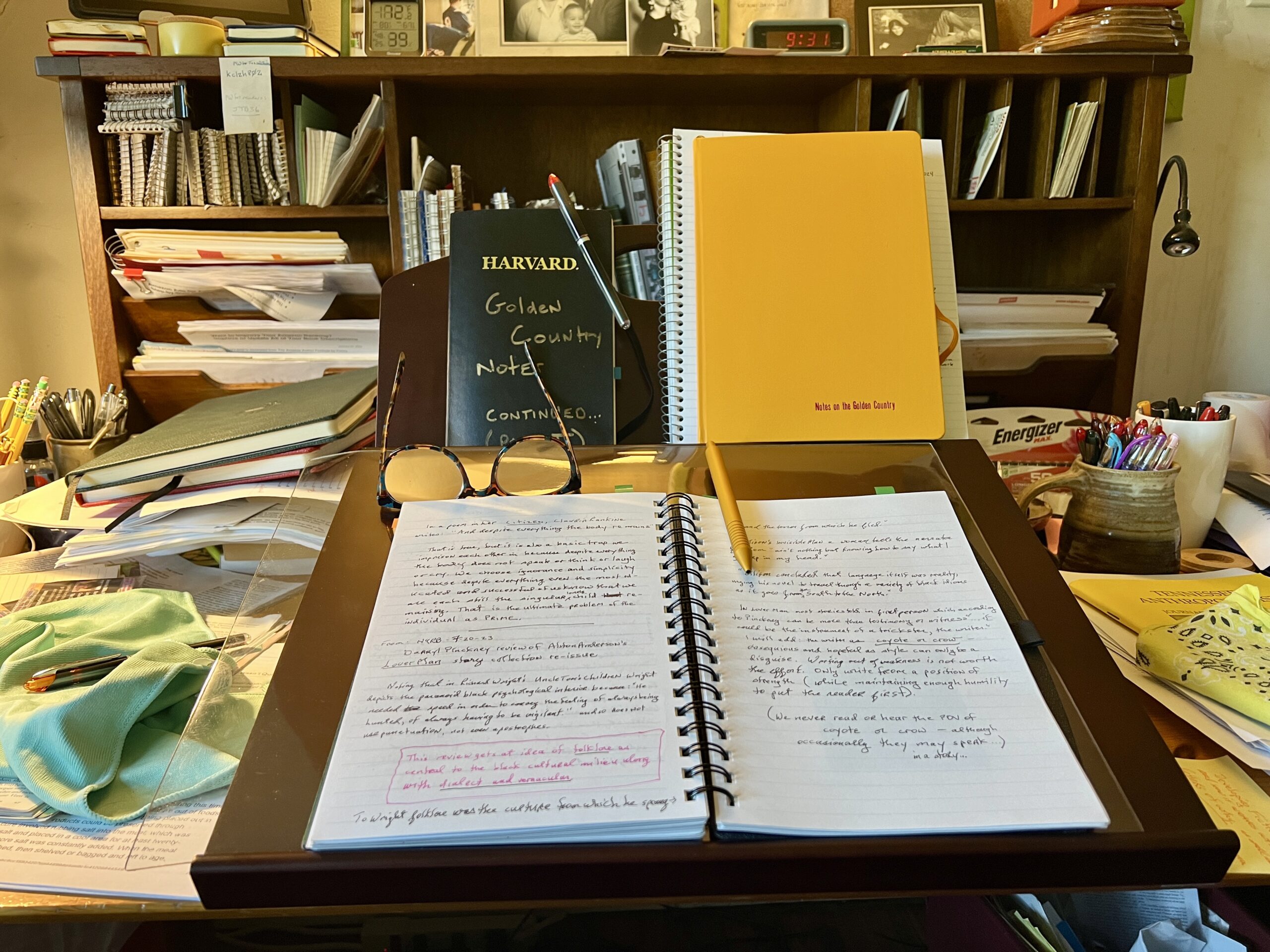
Seriously, we’re all writers these days. It’s useful to read the thinking of the world’s top practitioners. Their insights into process and intent can help with the most mundane written tasks. More importantly, though, writers–especially poets like Glück–tend to provide us with surprisingly useful insights into life. I offer a quick and simplified reason for this wisdom phenomenon from writers at the end of this piece.
To point, however: Deep in the interview, Henri Cole asks Louise, “Did you read poetry when you were a little girl?” That question struck loud even before I read her answer. Ever since I began writing Old Music for New People, I’ve been in search of thoughtful comments about identity and self-consciousness in this idiotic, ultra-modern world. The most important function of literature for the past century, in my opinion, has been to present us with a kaleidoscope of stories connected to people coming to terms with who they are in a world that seems a bit more predatory and judgmental than it should be.
Here, then, is Glück’s answer to Cole’s question about the idea of being a little girl:
“What’s odd in your question is the phrase “little girl.” I didn’t feel like a little girl — I would guess this to be a common feeling. I understood that I was perceived as one. I was certainly not a little boy. But I felt like a single, unprecedented thing, a mind, like the light a miner wears on their head. Adolescence, when it happened, was a shock. Suddenly I was inescapably confined by gender — I rejected this tacitly and also violently.”
Interview with Henri Cole, The Paris Review, vol. 246
“…a single, unprecedented thing, a mind…” Moving beyond reactionary politics and “correct speech” on all sides, that’s exactly what we are, even if we end up allowing the external world to absorb us. “Unprecedented.” Nothing more and nothing less, except perhaps the lights we make to wear on our heads.
Louise Glück died on October 13, 2023. She was 80. Surely, she was unprecedented most of her life. Every poet worth their beans is. But that’s also what each of us normal fools strives for … until, perhaps, we don’t. Which can be very sad.
Before signing off here, let me offer something to think about in 2024:
I wrote above that we’re all writers these days. That’s not hyperbole–certainly not with respect to anyone with a smart phone, laptop, or digital tablet. What is vital to understand about all the writing you’re doing is that when words in your mind get directly emblazened onto paper or liquid electrons in any way, your brain operates on a different level than when you speak. The same is true when you read, as opposed to simply listening to someone else reading to you.
It can be subtle at first, but writing and reading are intimate forms of consciousness and weirdly wired to the sub- and un-conscious parts of our minds. That can be quite dangerous, even ugly (think online trolls and angry anonymous rants). It can also be a wondrous and amazing thing, whether you’re writing to congratulate someone on getting into the college of their choice, attempting to out-poetify Louise Glück, or sending a passionate note to Taylor Swift or Carlos Santana.
Professional writers pay attention to this thing inside them that’s like a ringing bell tickling the brain in a certain way instead of making noise. When that bell activates, writers know they’re onto something. Everyone has that in them, you just have to pay attention and remain diligent in developing it. Like anything, if you pay attention and work hard you keep getting better at it. Reading great writers helps. In particular, reading interviews in The Paris Review can work wonders. I’m not going to get into the other side of the writing equation which is editing (and revising…endlessly), except to point out that the best writing is not intended to be wise or intriguing, it’s intended to be open enough so that readers have the opportunity to create wisdom and intrigue for themselves. Succeeding on that level is very difficult and requires lots or revising.
What I mean here as we head into a new year and life continues to be nearly completely out of control is that you could die next week. Now, hopefully, you have more insight into why writing and reading are vital to your existence.
Hopefully, too, you understand that you are “a single, unprecedented thing, a mind…” It’s the “unprecedented thing” that matters most. Don’t forget that.
Photo by Mark Hayward on Unsplash
Like this:
Like Loading...