The Old Music Part of Writing “New People”

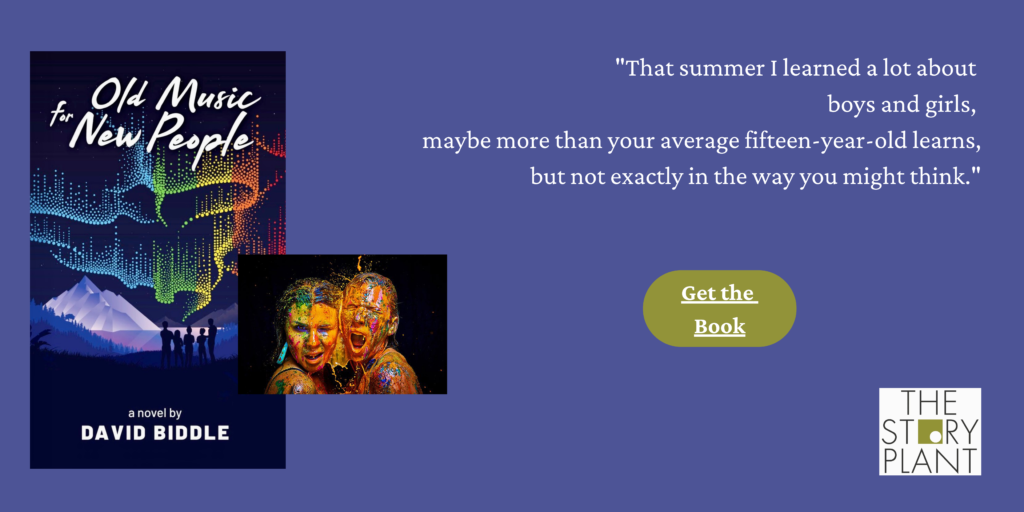
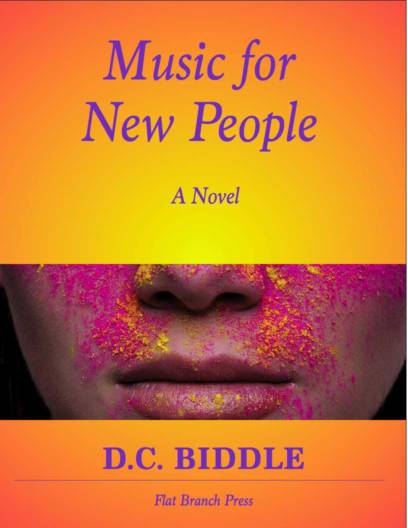
My novel, Old Music for New People, is driven in part by its characters’ thoughts and feelings about specific songs and musicians (baseball and food also have prominent roles in the plot). Many of the stories I write, whether long or short, have music painted into them. Sometimes I wonder if I’m a bit too hopeful about the idea of using words to describe what music does to characters emotionally and philosophically–and what it does to readers as well in their everyday lives.

Continue reading

Anything and Everything: advice on reading and writing, plus desiring intimacy with that special weather person on TV

Near the end of my senior year of high school, I asked my favorite instructor for advice on becoming a writer. Mr. Stawski was an extremely gifted English teacher, a PhD with 30+ years of teaching under his belt, certainly the most respected faculty member at our high school. He’d held a party for our Shakespeare class at his house. I was in a small group of students lingering after because it was so great to be around such a wonderful human being. I also wanted to hear his thoughts on what we should all be thinking about as we graduated and then headed off to college. Asking for advice on writing was also my way of telling him that I might be serious about pursuing a career as an author.

Mr. Stawski’s advice was simple and obvious. He looked me in the eyes and said: “Read as much as you can. People say writers need life experience, and I can’t argue with that, but it’s more important to read anything and everything–especially over the next decade or so as you mature.”

Continue reading

Making New Meaning: Fiction’s Role in Our New America

I want to add something to the endless discussion about why it’s important to read literary fiction. The discussion is important.

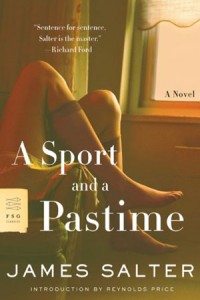
You may have graduated from high school English class and feel like you never want to go back again, but you didn’t graduate from Life. Too many people have stopped reading quality fiction that makes them think about Life these days. That’s why this endless discussion about books and their import continues — taking the time to think about life is essential for all of us. Books assume that’s why you’re reading them — especially literary stories by anyone from James Joyce and Virginia Woolf to Joy Williams and James Salter.

You can find a lot of essays and blog posts out there on the value of novels, short stories, and plays because they teach empathy and help people understand another person’s point of view. Indeed, the written word in general is still the most effective way to express all the nuances of human emotion. These days, it feels in some ways that people are losing touch with emotional reality and concern for how other people feel in any number of social situations. Could it be that fewer people are reading quality fiction these days? Maybe people are spending less time with books and more time with porn and video games.

You can also find arguments on how readers of serious fiction are proven to be more intuitive, better problem solvers, superior communicators, and higher achievers at Continue reading

Why I Wrote a Novel by a Girl: When a Dude Figures Out the Power of Emotion in Literature

I just finished revising the second draft of my next novel, which means I now have Draft #3 to print out. I’m doing that as I write this post. The whole process started back in October of 2013. Draft #1 clocked in at about 160,000 words (630 pages). Revisions for Draft #2 in December of last year shrank the book to 140,000 words. I was surprised at how many unnecessary sentences I’d written and how many extended metaphors showed up that a reader didn’t really need.

Draft #3 was an extraordinary process. My goal was essentially to lop 60,000 words off the beast. I’d gotten a fair amount of input from a few First Readers. In particular, several poet colleagues were concerned about the number of sub-plots I was offering up. They wanted focus and brevity. Poets!

I took a few weeks to think through their advice. I also got an interesting letter from a prospective agent saying, in essence, “I can’t take a look at a coming-of-age novel that is 140,000 words long.” Agents!

Continue reading

The Big Woman and the Small Ax: Some Implications of the Amazon-Hachette Book Stand Off

English: Logistic Center Amazon in Bad Hersfel...
Logistic Center Amazon in Bad Hersfeld industrial park “Blaue Liede” (Photo credit: Wikipedia)

Amazon’s truly living up to her name. She’s a Big Badass Woman in the jungle. She thinks she’s learned a lot watching Walmart beat the crap out of their suppliers so she’s doing the same thing.

If you pay attention even a little to the publishing world, you probably know that I’m talking about Amazon’s harsh tactics directed at publishing conglomerate Hachette. Hachette doesn’t want to use the pricing and marketing scheme Amazon is offering. Amazon wants to have ultimate control Continue reading

Advice on Supporting Indie Writers & The Best Indie Book Sites on the Web

I want to report that after two years of indiscriminate book reading on paper and screens, I have come to the conclusion that I like reading on-screen more than paper. I did not start this process as an experiment, but I was aware that I should do everything in my power not to be judgmental on either side of the fence as I read.

There’s the obvious issue of being able to change font sizes (my 56-year-old eyes suck), but in addition: I like the compactness of the reading experience; I seem to be able to scan a story better (that is speed up and slow down the reading process); it’s also awesome to set up a catalog of highlighted text with book apps; and Continue reading

The Effect of Staring at Screens: an essay on Alt Lit, Tao Lin, and Marie Calloway

English: Tao Lin in 2010
Tao Lin in 2010 (Photo credit: Wikipedia)

I’ve spent a good amount of time over the past few months really trying to understand this whole new Alt Lit approach to fiction. There are some links at the end of this essay if you want to explore this movement too. Basically, there’s a bunch of Millennial writers, mostly centered in Brooklyn and the surrounding area, working to be poetic and lyrical in new ways with text and art using everything from Tumblr and Twitter to retro-digital graphic technologies in the attempt to do something new to Literature (note I say to, not with…).

The main reason I want to understand Alt Lit is because over the past 2-3 years it has become all too apparent to me that the electrification and digitization of books and stories is the Continue reading

Holiday Price Slashes: Fiction By David Biddle

Up to 80% Off!

It’s Black Friday. Holiday pricing for ebook versions of Trying to Care: A Story Collection and Beyond the Will of God: A Jill Simpson Mystery are now at the rather low levels of $0.99 each. Take advantage of these offers. You can read electronic books on E-Readers, of course, but you can also download reading apps from Amazon that let you read books on your smartphone or your computer as well. Books that list at $4.99 cut by 80% to a penny under a dollar are good deals. Buy one for yourself and use Continue reading

The Sins of Multi-Media: Gliding the Electric Book

Image
Cover to SushiLove Sessions by Global Illage.

I am in the process of developing a musical edition of my novel Beyond the Will of God. Like many of my stories, this psychedelic mystery is at least partially about music. References to everything from bootleg Grateful Dead songs to free-form jazz to The Doors “Riders on the Storm,” and Elvis’s first hit, “That’s All Right” pop up in the book all over the place. Part of the meat of the plot is concerned with the transcendent power of improvisational music. Unstated, more or less, is the urge at least some musicians have to create new sound and new combinations of melody, Continue reading