I keep bumping into musicians, industry journalists, and economists online all saying that our society doesn’t value music the way we used to. The logic there is mostly based on the supposed problem created by streaming sources. An endless supply of computer curated songs are available to us, creating the old economic principle based on supply and demand, although more in psychological clothing than any other garb. When the supply of something is virtually infinite and effectively free, value is on a downward slide and the human mind begins to take joy for granted.
And yet, our lives are as full and rich as they are in large part because of the beauty and profundity of stimulated air molecules moving around and surfing into our ears, converted into any and every kind of music we have ever desired.
Friedrich Nietzsche said it best: “Without music, life would be a mistake.”
I personally do not agree that anything in the art world is being devalued. I do think that the economics of virtually all art forms is in dramatic flux these days, but that’s a different issue for a different essay.
Totally Freakin’ Crazy
Few things in global culture draw people together so obviously as music (and its close cousin, dance). We’ve gone banana-split crazy during the past six or seven decades for everyone from The Fab 4, MJ, Queen Bey, Bruce, Tay-Tay, The King, Adele, and that guy who coined the very term “Let’s go crazy,” Prince Rogers Nelson…totally freakin’ crazy.
That’s all because sound waves get converted by our eardrums into tiny new mechanical vibrations that are then turned by the “inner ear” into nerve impulses, triggering an astounding level of brain activity and the cognitive process we think of as hearing and listening and giving meaning to all sorts of sounds — especially music.
But what exactly is being touched in us and inspired when we hear our favorite songs and get a bit too overly gaga? What’s the source of all that sensuality and the inevitable (even indescribable) desire to move? What is that outlandish creation of new and complex emotion? Why at times such bittersweet memory welling up, rising through the chest and throat, drawing tears or thoughts of love lost, time gone by, the urge to dance in the kitchen? And why — incredibly enough — that profound awareness of a sublime connection to the universe and to each other — at least, if you are paying attention?
Yes, Why? How?
The question of music making us kind of psycho (especially during our teens) has fascinated me since I first witnessed several hundred teenage girls screaming their throats out at the Hall Theater in my hometown during the summer of 1964. I was six years old. Our babysitter had been given permission to take my brother and me to the local matinee premiere of The Beatles’ newly released movie, A Hard Day’s Night. Each time the lads took the stage in that movie, or even remotely seemed like they were going to sing, every young woman in the theater began to vociferate maniacally like they were ready to die quite happily.
Let me emphasize here: we were at a movie theater smack dab in the middle of fly-over America during the dog days of summer, when our college town had shrunk by 40% because the students had all gone home. There were no Beatles to hear the almost orgasmic screaming in that movie theater.
A few years later, I was taught to dance by younger kids who had older siblings. I learned The Monkey and did The Twist for the first time in my life at a neighborhood picnic. I was amazed and overjoyed back there in 1968 that music could take over my entire body. I recall as well having a minor inkling about what the term “soul” really meant.
Here in the 2020s, we spend much of our time with soundtracks filtering through our ears and brains, bathing our minds in whatever songs, beats, and styles we like. Every time I enter a coffee shop, I love the surprise of the type of music the baristas are playing. I love, too, the little pockets of competing sound waves that occasionally drift out of patrons’ headphones.
Sometimes it seems that our culture runs on caffeine and music. If you pay attention, you might hear classic Joni Mitchell or early Dylan coming from the shop’s speakers, but underneath and off to the side, there can be strains of Kamasi Washington, Joseph Haydn, Bon Iver, or Meek Mill.
Scientists like Henkjan Honing, a Professor of Music Cognition at the University of Amsterdam, are working hard to understand everything they can about music’s effect on our psychology. Honing has done research indicating that we are born already capable of discerning rhythm. He’s experimented with newborns and their expectations when they hear a beat.
He has also researched music appreciation in the animal kingdom. He and colleagues have found rudimentary levels of beat expectation in chimpanzees, but nothing as advanced as that in human beings. Our brains have a unique way of connecting what cognitive scientists call the auditory and motor cortices. In fact, I wonder if our “musicality” is what allows for that connection to become as strong as it seems by the time we’re on the downhill side of teen life.
But You Don’t Know What You Don’t Know, Do You?
So much is still under the hood and difficult to grasp. Whatever’s going on in there with sound, melody, harmony, and beat is operating as a deep power, even at a celestial level of human psychology, linking spiritual and metaphysical forms of awareness to poetic, nostalgic, limbic, and connective harmonious sensations of both the body and the mind. I also think it’s likely to continue — even with all of our scientific capacity — to be super difficult getting to the bottom of everything I’m pointing to here — new sounds, shifting volume, meandering harmonies, silence when you’re just about to arrive at that final understanding, a dark blank — and always that whisper of the next tune — anticipation, hope, desire, mystery, anticipation again…
I became enamored (maybe even obsessed) in my own teen years — the 1970s — with the idea that there is a tremendous amount of real human magic connected to music — a form of transcendence somehow, possibly even answers to questions that paranormal psychology raises, maybe solutions as well to puzzles about that whole altered state reality so many people keep stumbling around in, looking for secret meaning in life, or a new way to exist.
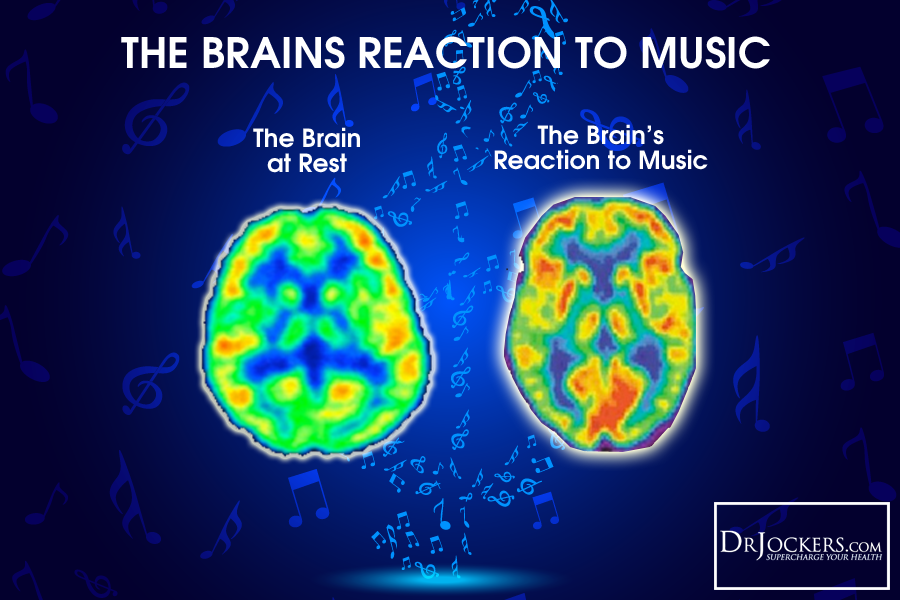
But 50 years ago the research still wasn’t out there for laypeople (especially teenagers) to explore, even though it seemed obvious enough that something incredible happens when we listen to or play music. I began to think of the magic that I felt I’d become aware of as at least as powerful emotional voyaging. What was most important to me in those days was that the intuitions I felt were definitely there — both during moments of altered reality and then again in this direct, and basic world we call “real.”
But virtually no one understood what was going on. And that’s more or less true today as well. I’m not sure scientists and psychologists are even asking the right questions yet. The experiments are often performed using classical music or opposing classical to heavy metal. What about jazz, live reggae, dance hall, rave, and extended improvisational electric guitar? Do certain drugs enhance and amplify the full scope of music or only certain portions of the cognitive experience?
Here’s the interesting problem with not knowing enough and not necessarily even asking the right questions: you either figure its all just “something that happens,” or you come up with funny fictions and myths for yourself.
Maybe you talk about those myths to friends. Not knowing can be a gift, especially in America where we all think we’re supposed to have the answers for every problem. I began concocting a story along the lines of all these questions years ago. Eventually I began researching the heck out of the angled trajectories that story wanted to shoot off in. It took a long time to bring it all into focus enough to publish it as the novel Sound Effect Infinity. That book wasn’t written in order to come to conclusions about the psychology of sound so much as it was an attempt to point out deeper levels of mystery than we tend to give our love of sound, especially music, credit for.
One of these days, we’re going to realize how fundamental music has been to the evolving creativity of human beings since the old days around the fire (likely before). Maybe musicians and composers (songwriters) will get the credit they deserve again in the form of a new economy that will help them continue to make it possible for us to go crazy together on dance floors everywhere.
Read more about how you were able to boogie in the womb here:
We Were Born to Groove, Henkjan Honing, Nautilus (December 26, 2023)
Also check out Honing’s books. Start with The Origins of Musicality
A recent version of this essay appeared in “The Riff,” published at Medium.com