A version of this note was published last week as “Deep-Fried America Dispatch #19” by Flat Branch Press.
We think of violence and dystopia when we think about nations splitting up. But this is America in the 21st century. Much as there is a minority who think in terms of aggression and antagonism, most of us just want to live our daily lives and do the best we can getting along with neighbors and co-workers.
Still, a few decades ago, I read an extended article in The New York Times about the slow demise of the population that makes up the Midwestern United States – especially the non-urban Midwest. Young people were beginning to migrate to the coasts and the southwest in large numbers. America was losing its rural, breadbasket population.
What interested me in the article was not the fact that people were moving away in droves but the question of who was staying. Who was staying and why? Who was staying, why, and what was going to happen to that middle part of the country over the next five to ten decades because of those who stayed?
Hear My Train…
Back in 1976 as I came to the end of my high school days in Columbia, Missouri, all I wanted was to get the hell of Dodge. The reason many of us think we need to take drugs when we’re in high school (or younger) is because we need to escape the life we grew up in. There’s a reason using psychedelics is called ‘tripping.’ Right? At best, teenagers are impatient to have life get rolling. At worst, they become easily addicted or even suicidal.
I will always be on the fence about the six or so years I spent trying to escape that teenage world back then. I took anything I could find that seemed to promise new windows on life and new escape routes. Speed, downers, and opiates were pointless. A friend (who would eventually die at the age of 32 from addiction and despair) once said to me, “I don’t get high to find anything, I just don’t want to think. I don’t even want to feel good. I just want to feel okay.” I understood what he was saying, but I had not interest in ceasing my thoughts and eventually arrived at Reed College a few years after Steve Jobs arrived there, 1,925 miles from home.
Cheesesteaks Forever
I was in heaven living in Portland, Oregon. That was major, big time city life as far as I knew. West Coast culture: astounding legacy restaurants from Jewish delicatessens and luxury hotel Sunday champagne brunches to veggie sandwich shops and creative hamburger diners; local beer (eventually called micro-brew); exotic coffee roasted onsite; fruit shakes that would also obtain a different name a few years after I graduated; and this weird new running shoe company with the badly pronounced (or spelled) name. Also every kind of live music on every level imaginable from arena rock to jazz, blues, and this new kind of sound people were beginning to call World Beat. Portland back in the 1970s (as it it still is) was a major front for a New America. Creativity was everywhere. The future of everything was bubbling up.
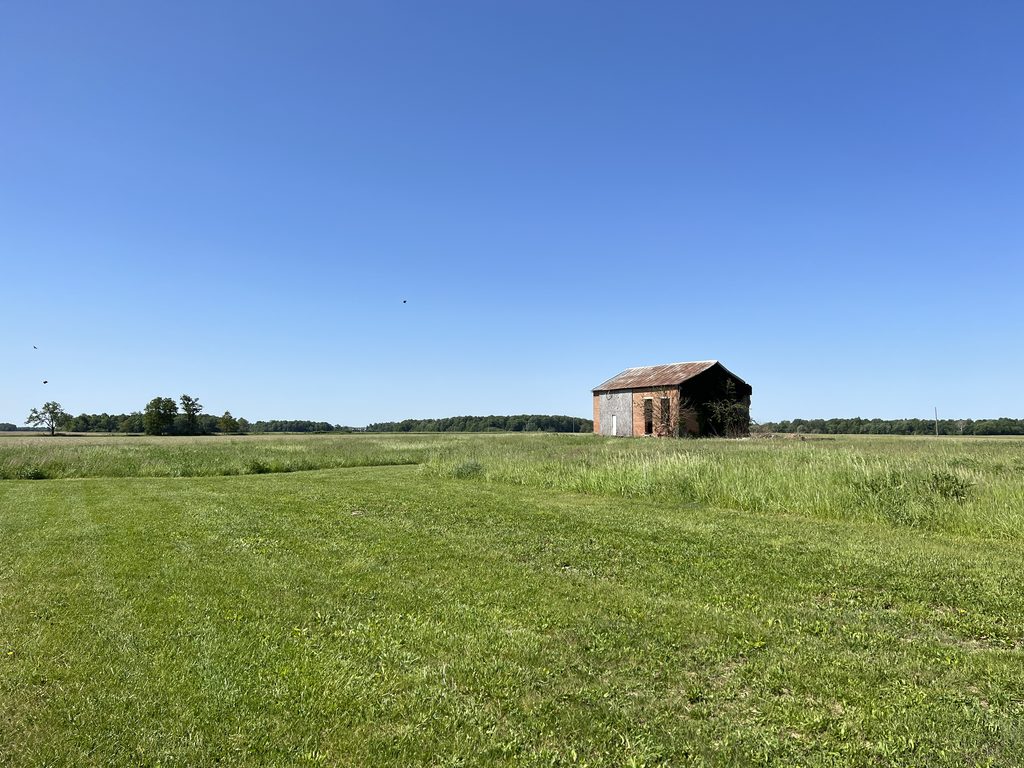
And yet, still, in my late 60s now, I have nothing but fond memories of tromping through the woods behind our house in Columbia; Saturday afternoons at Farot Stadium watching our beloved Tigers at war with the likes of the Cornhuskers and Sooners; going for Sunday drives out in the countryside with our parents; fishing in the lake behind our house; camping-out in southern Missouri with my brother; and our pals; a summer job at Semo Farms herding ducks and driving tractors all over Kingdom Come in order to mow massive fields and rake and bale hay; also doing any number of crazy things down along our section of the Missouri River once we could drive.
However, by my early 20s, if I returned home to Missouri for a visit, it was always with growing trepidation. Finally, by my mid-20s I settled down, bought a 100-year-old house and began raising a family here in Philadelphia. I still tell people, “Central Missouri,” when they ask where I’m from––even after 45 years in Philly and becoming a Phillies and Eagles fan, knowing where the best cheesesteaks can be found, and living in one of the most diverse and progressive neighborhoods in America.
The Middle Lands
Living on both the West and the East Coasts, then, I understand intimately how different those worlds are from Midwestern and Southern America. It is no wonder to me that our national politics have become such a circus of irrationality and hyperbole (on all sides). That circus mentality is where the idea of the Middle Lands comes from, and the idea of The Drift Away. I see as well – we all do – how possible it is that over the next 20 to 30 years a large chunk of citizens may begin to think they want nothing to do with the cultures on and near the country’s coasts. For that matter, I don’t know what those of us living in big cities anywhere in America are going to feel about those middle and southern sectors of the country if the view of who we are as a nation continues to be so divergent.
Here’s a passage from early in Sound Effect Infinity to describe how things might actually go:
“There was no secession or war, really. Not even an agreement that had been discussed in the media or codified with a memorandum of understanding between those in charge of regions. One of the methods of the Middle Lands was to eliminate much of what was considered official. There had simply been too much turmoil and too much inability to define anything useful between the major groups. Incompetence on all sides. People simply shifted and migrated to where they felt comfortable. The Middle Lands became a new kind of territory—still America but certainly not the United States thereof.”
Chapter 1: Night Hunting
If you read Sound Effect Infinity, you’ll find a fairly detailed story based in part on my initial vision of what that New York Times article on people migrating out of the middle of our country might look like. See what happens when everything goes sideways and the resulting collective imagination grabs hold of anything that seems like it might provide a morsel of escape.
Sign up for more Deep-Fried dispatches at Flat Branch Press.
Artwork by Jordan Cipolla of Orbit Lane