I recently received an email telling me that someone “liked” a comment/post I made to a Substack last June. One wonderful thing about writing when you’re in your last quarter is that you often forget about some of the stuff you wrote–both on the fly and even stories and passages in novels you’ve been working (for far too long). The forgetting allows at times happy surprise and even pride.
Indeed, I’m quite happy, surprised, and feel pride in what I wrote below. If you go back in my website here, you’ll find numerous references to this issue over the past decade and a half.
Rebecca Solnit writes comfortably in multiple veins as geographer, historian, environmentalist, memoirist, feminist, humanist, journalist, activist, even novelist. It’s pretty clear to me that she is one of our finest writers. In particular, her consistent artistic and poetic approach to essays and long-form narrarative is always surprisingly insightful and enlightening. And the way she writes, melding deeply personal perspective with a constant drive to pull back the curtain on the special ironies and contortions of American life, is the rarist form of reporting and commentary I know of – especially here in the 21st century (which, may I remind you, is now 25% in the can and still foaming).
Lately, Solnit’s been up on the battlements pushing hard to turn the tide in this current attempted
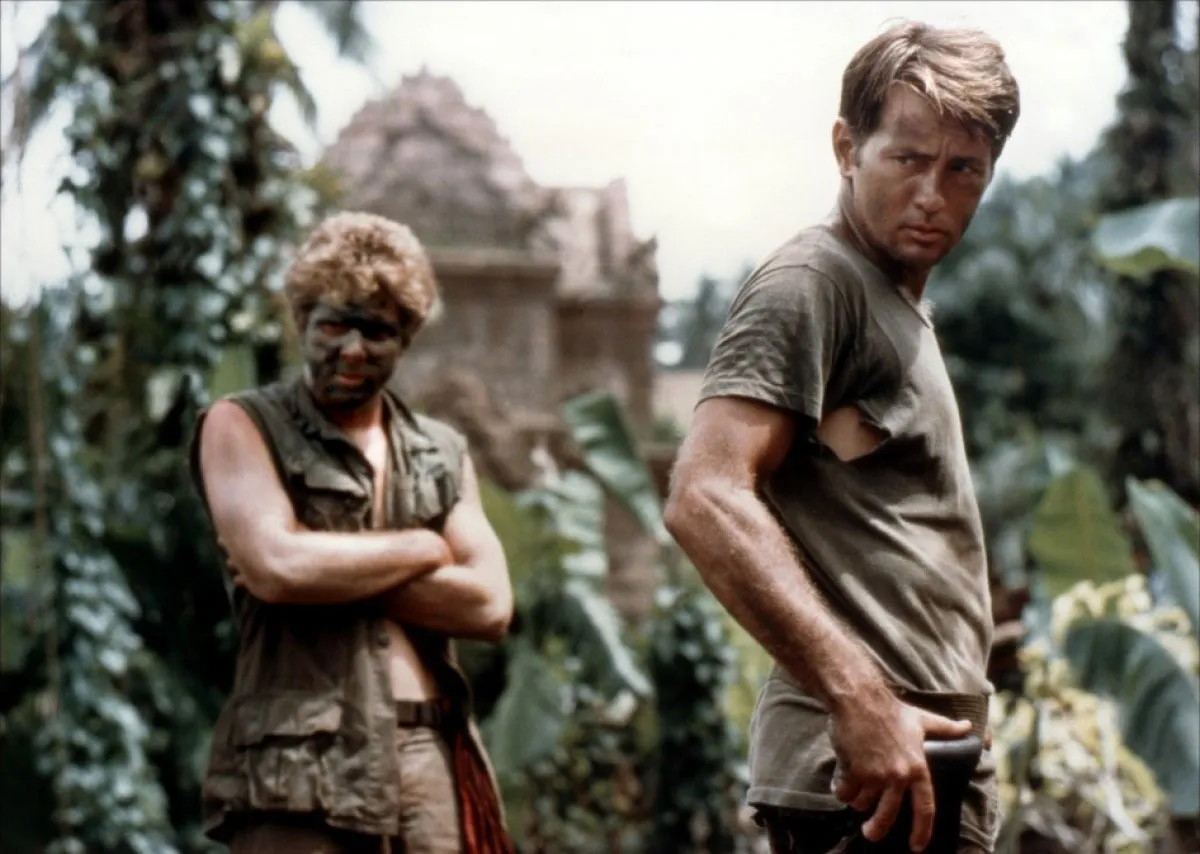
One of my favorite scenes in Francis Ford Coppola’s 1979 movie, Apocalypse Now, is when Martin Sheen’s character, Captain Willard, has landed on a river bank in the dead of night during a major fire fight between US troops and their hidden North Vietnamese opponents. With young Lance (who is tripping on acid) in tow, he is trying to locate a commanding officer in the midst of all the chaos and violence and fear. Willard asks two guys hunkered down in a trench who their commanding officer is. One turns and says, “Ain’t you?”
Back in March, TW Magazine published commentary by me called “Which Way We Going Now?” What I wondered in that piece was how artists of all types were going to respond to changes forced on us by this new administration.
The last time we had to deal with those same folks, the only significant artistic attempts to consistently address problems they were creating for the country seemed to come from comedians (and cable news talking heads having fun with various eye-rolling group exercise sessions). Now, however, we are living with a 2nd Term version of what some call the most incompetent, venal, and hostile administration in history. I promise not to go into detail about their shenanigans. Anything I attempt to describe explicitly from yesterday will be overshadowed by new bizarre travesties tomorrow.
June 12 is a special day. I’d guess most of my Facebook Friends are aware of Loving Day. Doesn’t take much to understand why. J.D. Vance might understand better than many of you. Same with Clarence Thomas. Also Barack Obama and yours truly (along with my enormous extended family). Actually, the list is virtually endless the world over even though most people don’t realize it.
But, a question: Have you found information on what this date is about in your local paper or any of your regular news sources? And how much detail did you get?
I’ve been wondering about two things ever since the spring of 2016 when Donald Trump began winning primaries and getting all sorts of weird media attention. First off, were the Republican Party and its voters really willing to accept responsibility for the direction that guy wanted to push them? And, secondly, how much would the art world step up as a reaction to what Trump and his ilk seemed to want to do to our country?
A version of this essay was posted a few months back, but is certainly worth posting again in modified form given, finally, the publication of Sound Effect Infinity.
I’d guess most hardcore readers of what used to be called “science fiction” know that the book industry has decided to wrap fantasy and science fiction into a single package they’re calling “speculative fiction.” However, the music world is also attempting to lump smooth jazz and R&B into “neo soul,” so…
I’m in the middle of writing a novel about 21st century racial identity, among other things. Also, pioneering, mixed race farming communities in the 19th century Midwest, and the future Utopia that we are all not going to know we’re living in. I began writing this story in the fall of 2003, partly as an experiment with a new-fangled thing called Weblogs. Also because after being on this planet for 45 years, I’d finally learned the secret of my biological heritage.
I was adopted in 1958. There were numerous “stories” about that adoption people told. But no one really knew anything besides the fact that I had dark features and looked like I came into the world as a blend of different types of people. No one ever really understood that I’d spent my life on the outside of DNA conversations. I felt left out and that I was missing something in life, but I also kind of felt superior to people who thought that stuff mattered.
That thinking went on way into my adult years. In the end, my wife and I decided we needed to somehow address the whole heritage thing as it pertained to me (she’s a locked down Irish-American lass). It seemed like good parenting to at least take a shot for an answer to the very real and intimate question: “Where did Dad come from?” Also, for that matter, “How did he get here?” In the case of blended adopted people like me, those are very visceral and poignantly simple questions that legitimately require an answer for one’s children.
So in 2003 we went searching for those answers. That was just as Ancestry.com was becoming a functional possibility for easy solutions to the question of DNA inheritance. A few years later I would actually take a spit-in-the-tube test.
But here’s the point of this hopefully quick essay: Yes, I was somewhat aware I could determine my ethnic heritage (note I do not say race because there is actually no such thing) using the test tube method, but I was also aware that taking a trip to the middle of the country where I began life might be an adventure that would change our family’s whole sense of who we are in the world.
That was all a bit more than 20 years ago. I’m not going to give away any answers here, except to say that we learned so much more than where I came from and why I’m here. It’s kind of a funny thing for someone like me to even think that my physical heritage really has much bearing on who I am as a person. Some might argue that being able to identify yourself as part of specific ethnic groups is a simple enhancement to the beauty of life.
I’ll let that last sentence percolate there for all of us here in 2024.
I was a fortunate little sprout growing up as a Biddle. My father was buddies with Coretta Scott during their first year at Antioch College in Yellow Springs, Ohio. They both loved music and were in classes and performances together. I was also raised in one of those weird, progressive families that periodically go to Friends Meeting when it’s convenient (or important) on a Sunday morning. Yup, we were Quakers (there’s a very long history for the Biddle family on that topic). I am proud of all that.
But what I want to close with here is that I was raised in a household where that oh so famous quote by Dr. Martin Luther King, Jr. wasn’t simply a nice thing to claim you believe in:
“I have a dream that my four little children will one day live in a nation where they will not be judged by the color of their skin but by the content of their character.”
–MLK, Jr.
I know it’s still a vision and a dream, but I feel that in our hearts every single American believes in that vision, especially those who are the most cynical about Dr. King’s statement. Everyone knows about that character idea and the problem with judging people we don’t know. We do it anyway, but we all know better. We really do!
In the end, the history of my DNA doesn’t really matter, not compared to all the people I’m connected to in my life and all the groups of which I am a part — from baseball fan and lover of improvisational music to half-assed Quaker and proud, loving citizen of my country and the world. I will always be on the outside looking in when it comes to DNA and biological heritage. Won’t that be funny someday when everyone has that same perspective?
Watch for the story I’m working on sometime near the end of 2025. It should be a wild read.
A version of this quick-read commentary was originally published by The Good Men Project as well as in their "Equality Include You" publication at Medium.com
A version of this essay was published in the Illumination publication on Medium several weeks ago.
These days, I wish as hard as I can for good things that are considered impossible to happen, like there actually being a Santa Claus with a whole team of people way up North who spend all year working on ways to gift the world with love and happiness and really cool new technology to boot. I also wonder sometimes whether we’ll be alive when the next truly artistic and creative musically gifted songwriters come along the way the Beatles did and don’t just change the course of music, but change the power of creativity and aesthetics for artists everywhere. I think and wish for that kind of stuff, because I firmly believe that envisioning amazing things is the only way we get beyond the malaise we’ve built for ourselves here in the 2020s.
I also wish people read and talked about utopian concepts more, and at least believed in the real possibility of more ideal societies. Whether we like it or not, the job of life will always be to build a better future for all of humankind. Note that italicized word there. It’s important.