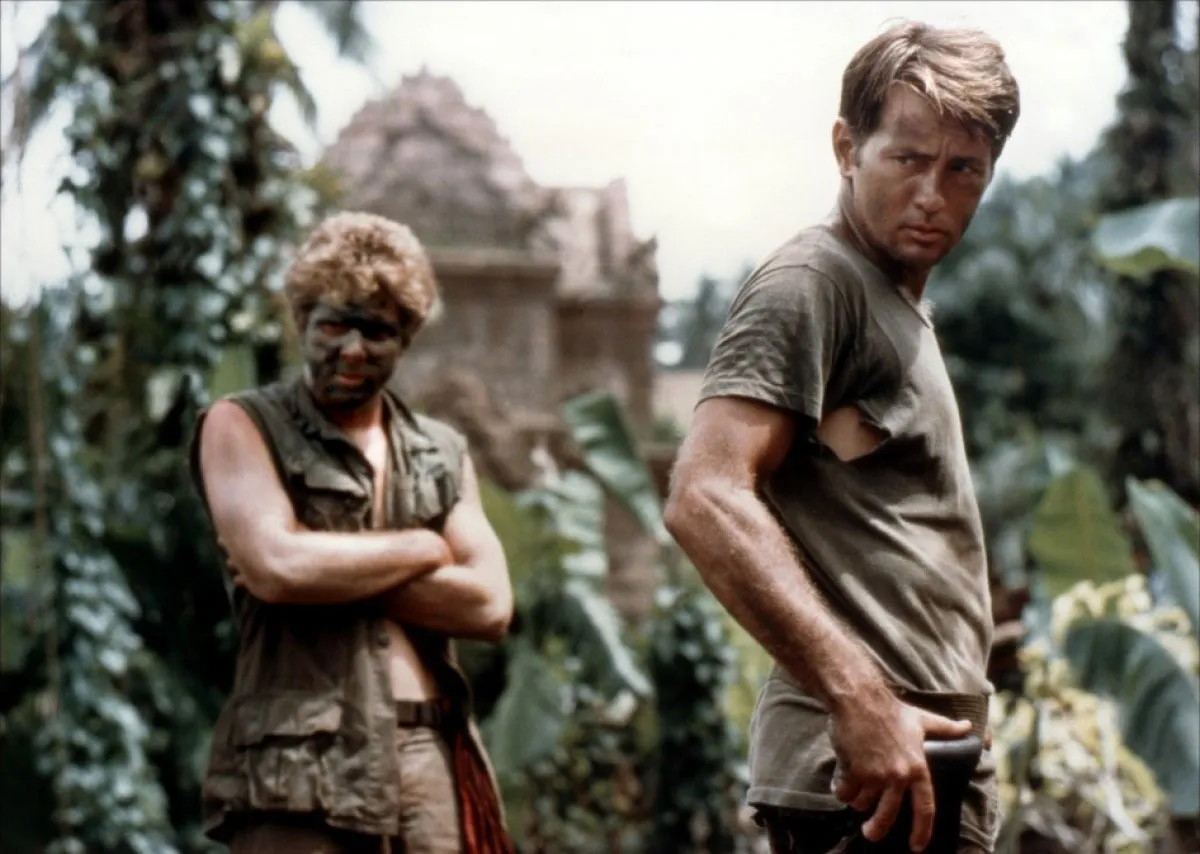
One of my favorite scenes in Francis Ford Coppola’s 1979 movie, Apocalypse Now, is when Martin Sheen’s character, Captain Willard, has landed on a river bank in the dead of night during a major fire fight between US troops and their hidden North Vietnamese opponents. With young Lance (who is tripping on acid) in tow, he is trying to locate a commanding officer in the midst of all the chaos and violence and fear. Willard asks two guys hunkered down in a trench who their commanding officer is. One turns and says, “Ain’t you?”
I’ve been wondering about two things ever since the spring of 2016 when Donald Trump began winning primaries and getting all sorts of weird media attention. First off, were the Republican Party and its voters really willing to accept responsibility for the direction that guy wanted to push them? And, secondly, how much would the art world step up as a reaction to what Trump and his ilk seemed to want to do to our country?
I’d been working on Chapter 12 of my next novel (due out in November this year, 2023) for a few days. A bit more than a thousand words in, I wrote this sentence: “He was going to need to figure out how to deal with whatever Arthur Gold had planned, but it wouldn’t do to show his hand right there.” My brain came to a full stop. I understood I could take that sentence a whole bunch of directions. I had no idea which direction made sense. I also wasn’t sure I even liked that sentence.
I’d written about two pages (a decent amount for any morning at my desk). My brain was saying it’s time to call it quits. Something will show up tomorrow, hopefully. Maybe not. We’ll see. I wasn’t worried. However, a few years ago a shut down like that might have found me feeling incompetent or guilty or frustrated or discouraged .
Most people would love to have any of numerous magical powers. The most logical ones for this day and age are probably telepathy and psycho-time travel (also known as chronovoyance). Remote viewing and telekinesis are up there, too.
Specialized telekinesis talents, like the ability to control clock speeds, have been amply documented during the 20th century in several places around the world, most notably Israel, South Africa, and the French Cola Islands.
By 2010, other powers had been almost fully ruined by superhero movies. We know now that if people assume things are myths or just movie magic–like flying, super strength, invisibility–even time travel and thought control–people lose the ability to figure out whether they can actually do those things. And some people have always been able to whether they know it or not.
The elimination of anything super human from the possibility of imagination is a purely 21st century phenomenon. There is no telling how this is effecting cultural evolution. It may as well be the reason that so many people are caught up in silly (and imbecilic) conspiracy theories. That’s all most people have left.
(In preparation for the publication of my next novel, Sound Effect Infinity)
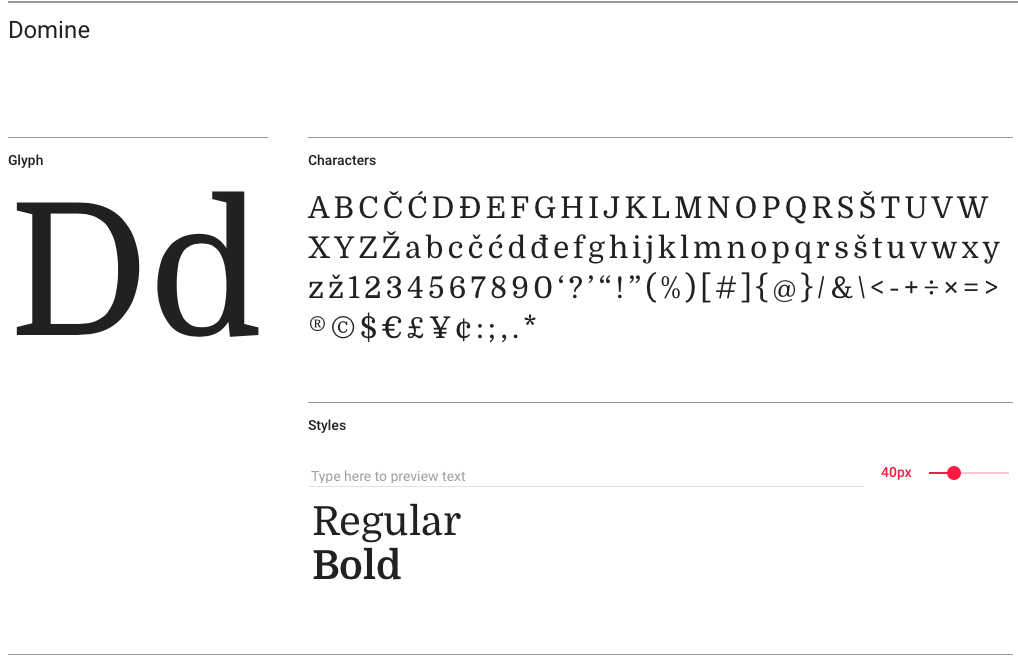
Special Note: This post was composed a week prior to the decision to overhaul the theme for this website. Thus, the font reference below, "Domine," is now anachronistic and passé. The font family here, now, is Lora. Apologies for any confusion.
In the category of “Will the Internet Always Be a Wild West Show?” I want to discuss font choices online. There used to be fairly clear rules for when you use sans serif fonts and when serif ones were more appropriate. In the old days when you finally got that Mac and were confronted with this massive fruit basket of typefaces your instinct was to go hog wild. I have always loved Comic Sans and once used it to print out a draft of a short story I’d written, only to find myself dizzy and feeling quite puckish reading half way through the second page.
Over at Talking Writing they just posted an interview I did with the great American travel writer and chronicler of deep culture, William Least Heat-Moon. I had a lot of fun researching and preparing for this Q&A session. I think Bill had a good time answering my questions.
We talk about his newest book, the need to write with care, book categories, and digital publishing, among other things. Here’s a snip from my introduction. You can read the whole piece over at TW right now. Just follow the link at the end of this cut.
I highly recommend purchasing Writing Blue Highways and Blue Highways itself as holiday gifts this year. These are true examples of great writing by one of this country’s most distinguished bards.
William Least Heat-Moon: “Damnable Speed”
TW Interview by David Biddle
December 10, 2014
In 1982, the Atlantic Monthly Press and Little, Brown published Blue Highways: A Journey into America. It’s William Least Heat-Moon’s account of a three-month, 14,000-mile road trip he took in a converted mini-van he called Ghost Dancing. Heat-Moon drove the back roads designated as blue lines in his Rand McNally Atlas.
Blue Highways surprised the publishing world. It was hard to categorize yet sat on the bestseller list for nearly a year. Part social history, part travel writing, and part spiritual odyssey, Blue Highways offers tales of America’s forgotten “outback” and the people still connected to that fading world. The writing is lyrical, full of life lessons, and informed by a strong environmental ethic. Heat-Moon went on to publish many other works, including the recent An Osage Journey to Europe, 1827-1830, coauthored with James K. Wallace (University of Oklahoma Press, 2013).
His latest project is Writing Blue Highways (University of Missouri Press, 2014). It’s an autobiographical tale of the trials and tribulations of a then-unknown author struggling through nearly four years to write (and rewrite ten-plus different times) an acceptable manuscript for publication. But more important, Writing Blue Highways is also the definitive story of how a work of literary art, from conception to publication, comes to be. Read the rest in Talking Writing’s Holiday Issue 2014.
Not the cover you usually see for this great book.
Over at The Millions Michael Bourne (the writer, not the center fielder) has an essay this week called “Magical Thinking: Talent and the Cult of Craft.” Lots of great comments and thinking come after his pretty thoughtful exploration of the question of success in the writing world: Talent? or Craft?
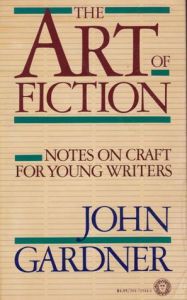
Bourne makes a good case against this statement in John Gardner’s book The Art of Fiction:
“[T]he truth is that though the ability to write well is partly a gift — like the ability to play basketball well or outguess the stock market — writing ability is mainly a product of good teaching supported by a deep-down love of writing.”
Maybe Bourne lays it on a little thick about the problem of writers leaning a bit too heavily on the idea of studying the mechanics of good writing and storytelling (especially in MFA and college creative writing programs). I didn’t really pay much attention to that side of the equation. The idea of “talent” just really struck me. There’s no question Continue reading →
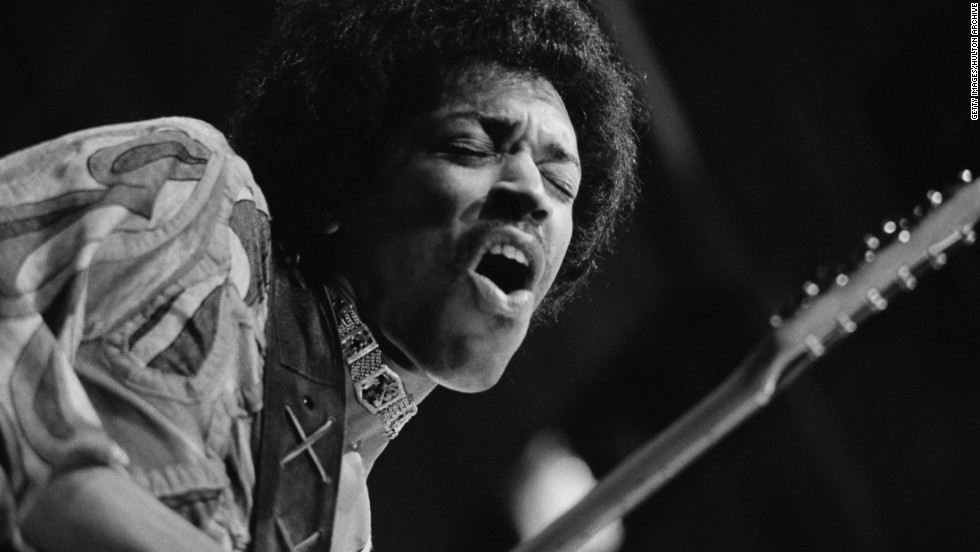
Today marks the 44th anniversary of Jimi Hendrix’s death. He left this world when he was just 27. Thanks to my good friend Derrick Baldwin for reminding me of this. Derrick is one helluva keyboardist and I love it when his band gets him to sing.
Some people think you’re pathetic if you gush even just a smidge about Jimi. Those people don’t know shit and probably think people on “America’s Got Talent” are artists to follow for life. There’s more to art, though, than standing on stage and having yourself electrified into people’s homes.
Watch the video below and listen to what Jimi says about practicing. What separates Continue reading →
The Jimi Hendrix Experience performs for Dutch television show Fenklup in 1967 (Photo credit: Wikipedia)
Anyone who’s watched video of Jimi Hendrix (or was lucky enough to see him in person) knows that his LIVE, improvisational guitar performances are unparalleled. His early reputation of wild child shaman boogie man was something many of us not only revered, but we saw that persona as an ultimate expression of who we thought we might want to be (us guys anyway).
As much as Jimi was the epitome of masculine style for us hippie-heads back in the day (gotta admit I was 9 – 12 when he was peaking) his stage presence with all its cosmic force and roaring witch doctor invention was what truly made you want to “Be Like Jimi.”
Here’s the interesting thing, though: musically, as brilliant and inspiring as his creative stage performances could be, it was his work in the studio crafting, creating, and massaging songs that was his true brilliance. The video below provides a good example of this genius and its effect.
Jimi wrote “The Wind Cries Mary” one night after arriving in England, and the next day The Experience recorded it on the fly during the last 20-minutes of studio time they’d paid for that day.
Watch the short video below for words from the cats who were there. It was just supposed to be a first-run demo kind of thing. Jimi kept figuring out new things he wanted to do with the guitar as they went along, so they kept dubbing these inventions in as fast as they could. I’m putting a link to the song at the end of this piece, too, so you can see the final product performed live just a few months later.
Note here what Eddie Kramer points out about Jimi playing the song’s chords softly while he sings the vocals. Jimi was very insecure about his voice. He needed to hug a guitar to his chest in order to sing the lyrics of one of the most beautiful songs that came out of the psychedelic era, something he’d written not 24-hours earlier. It’s such a treat for us 47 years later to have Kramer break down that moment.
The studio-Jimi, the composer-Jimi, and the techno-Jimi were the secret geniuses that we don’t think about enough. Go back and listen to those first albums (Are You Experienced?,Axis Bold as Love, and Electric Ladyland). His genius is still steaming in the air after nearly 50 years if you listen carefully enough.
What I want to know, though, is how he was able to be so gosh darned endlessly creative. I mean, we’re talking floating out above the heavens with his energy and musical soul all the time, every waking hour of every day. Yeah, it was the pinnacle moment in his life. Many gifted artists have their most prolific years from about 22 to 28 or so. Young synapses fire constantly. I remember so many of my friends when we were at that age (in the late ’70s and early ’80s), so many ideas, so much nascent art and political thinking percolating out of every orifice we had. But what we were doing obviously wasn’t as profound or freaking playfully connected to Infinity the way Jimi’s work was.
Maybe his creativity was partly more a function of all the people who were around him, along with being part of a moment in recording history when new tricks and gadgets were part of everyday music engineering for the first time ever. Obviously, there were more than a few insanely important artists roaming the world back then, bumping into each other, influencing one another and competing. And maybe, too, all the people around Jimi everyday, plus all the fans (and in those days we all knew good music when we heard it), inspired a palpable confidence in him, which in turn amped up the creative output, which in turn meant further acceptance and confidence, etc.
No one has come along since then with that level of fearless genius. No one. There’s a lot of talent out there, but no one comes close to that kind of creative force…in my opinion.
This is the second installment in a series on real people’s thoughts about Jimi and what he meant to them…and to modern music. Listen to the song: